김춘미 : 회화 위의 대기적 신체 (Atmospheric Body on the Painting) > 전시평론ㆍ작가노트

본문 바로가기
🇰🇷
🇺🇸
🇯🇵
🇨🇳

전시평론ㆍ작가노트


전시평론ㆍ작가노트 


김춘미 : 회화 위의 대기적 신체 (Atmospheric Body on the Painting)

본문

Kim Chun-mi: Atmospheric Body on the Painting 

Yoo Jin-sang / Professor at Kaywon Art University


One of the most intriguing issues raised by Kim Chun-mi's paintings concerns the artist's body. A prominent sign of the transition from modern to contemporary painting was the audience's realization that every artist's body is unique. It was understood that not only are the bodies different, but the artist's body is shaped by numerous conditions attached to it—such as habits, symptoms, psychological fixations, stereotypes, trends of the times, and acquired learning—and that this shape exerts a decisive influence on the movement and action of the brush and paint, as well as the resulting outcomes. The fact that the artist's body is a decisive element in painting became evident after Abstract Expressionism. Above all, attempts emerged in which artists themselves studied their own bodies, identified their characteristics, and utilized the movements of joints and muscles as tools to derive constants and variables. In the examples of Picasso, Arshile Gorky, Willem de Kooning, Cy Twombly, and Joan Mitchell, we can discover a history in which such radical transformations have renewed and redefined painting. Through the development of 20th-century painting, the body evolved into the most essential tool, evoking affect alongside the flexibility of the brush and the elasticity of the canvas. Among them, Twombly and Mitchell invented a completely new painterly body. They erased all traces of familiar notions known in painting and began to record truly unfamiliar painterly phenomena that no one had ever seen. From this, an adventure toward the 'outside' of painting began. Kim Chun-mi's paintings are situated within this remarkable lineage of painting history. Here, it is necessary to examine what that entails. 

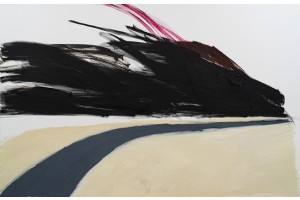
8c9270b8fc6f437b158b4dd77f155702_1773980904_9884.jpg
Choon Mi Kim, The Drive, 2026, Oil on linen, 180 x 220 cm  © Artist,  Rian Gallery  

8c9270b8fc6f437b158b4dd77f155702_1773980919_2723.jpg
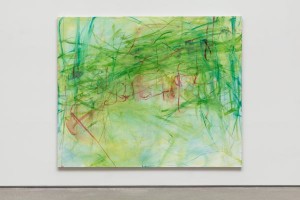
Choon Mi Kim, Si-i, 2026, Oil on linen, 180 x 250 cm  © Artist,  Rian Gallery  

8c9270b8fc6f437b158b4dd77f155702_1773980937_1345.jpg
Choon Mi Kim, Smudged Asterisk, 2026, Oil on linen, 220 x 180 cm.  © Artist,  Rian Gallery 


There is no answer to the question of what painting is; there are only examples. What distinguishes painting from drawing is that, like the human body it is, it is composed of flesh and blood. In oil painting, it consists of grotesque or sensual surfaces where sticky or dripping bodily fluids and tangled masses of dried flesh are intertwined. The materiality of oil painting, sometimes drenched and sometimes thick, evokes the body even more clearly through the dripping pulp of wounds, sexual traces, decaying organic matter, and stains violently splattered here and there. It is inevitable that oil painting entails a sensual sensation, and the reason the viewer cannot take their eyes off an oil painting is the synchronization between their own body and the canvas. And the painter makes all these elements into an irreversible event on the canvas. There are two verbs: 'to apply' and 'to mark.' 'Applying' is spreading paint across the surface of the canvas. The movement of the brush builds layers on a given plane and area slowly, intentionally, and sometimes through repetition, for the settlement of paint on the canvas and the chain effects it will bring. 'Buried' is different from this. Its essence is not the paint. The paint is merely a trace inevitably and incidentally left behind by an 'unexpected event' or 'physical passage.' For example, <Si-i> is the word 'Si-i' written in red on a space filled with bright blue scribbles. In Kim Chun-mi's work, 'calligraphy' is not only an important formal element but also an conceptual 'event' occurring within the painterly spatiotemporal realm. In other words, 'Si-i' becomes something different from its original form or meaning during the process of writing it. What is important here is the nature of the event that occurs. This event arises not from the artist's intention, but from an 'external force' passing through the artist's body. The artist moves toward the space where that force originates, induces it, provides the impetus for it, and allows it to pass through their body. 'Si-i' refers to an empty space that belongs to neither semantic nor morphological term, while simultaneously remaining as its trace within the painting. This is similar to the 'non-organic events' that occur in the bodies of dancers such as Merce Cunningham. Just as a dancer reconstructs their body to allow 'non-organic' forces to pass through them, the painter also reconstructs their own body quickly and precisely. The purpose is not to reveal meaning, but to capture the conditions surrounding the generation of meaning. 

The title of this exhibition, *Isobars In Down*, can be translated as "isobars inside a winter padded jacket." Isobars are lines connecting locations within the same atmospheric pressure zone on a map, much like contour lines. While painting in a cold studio during the Korean winter, wearing a thick padded jacket, the artist experiences their body transforming into an intangible flow of air. *Low Pressure* is a work that demonstrates how the artist's body transforms into a stage. The blue shadows cast by the frame and the lighting in the left corner, the air that is coldly blue and thin, the distant night mountains in the background, and the long green grass in the foreground all possess the conditions for drama. Then, two intense blood-red stains take center stage in the frame, much like protagonists. The artist titled this scene "Low Atmospheric Pressure." This could be a story about a melancholic, quiet, and low-key tragedy, or it could be a narrative of love and passion in the Arctic, where bright, long nights continue. All of this stems from the flow of air passing through the artist's body. 

*Shared Stems* is a diptych depicting swaying red lines cutting through bright, crisp emerald air. The long lime-green lines slightly in the background and the dark lines in the foreground, resembling redroot pigweed stems, appear to form a counterpoint between two distinct bandwidths. In the space on the left side of the right-hand screen—that is, close to the center of the overall picture—these two bands intertwine, collide, and create crosstalk, raising the temperature. While the air surrounding this event is tinged with pink, the red lines, appearing like grass, on the other hand witness a moment that repeats itself eternally, much like historical witnesses. *Sea of ​​Thin Light*, conversely, is composed of thinly superimposed layers of yellow, green, and blue air instead of intense lines. As the title's "thin light" suggests, the canvas is filled with the bright light of the canvas, delicately and sensitively piercing through the layers of paint. The artist's task is to draw that light up and transform it into a scene. The screen is divided into three sections: a yellow area at the bottom, a darker blue above it, and a higher area with a light green tint. Very restrained, blurry lines cut across the space between them. Like mythical beings appearing on a stage in the dim light, they pass through slow, sticky time in a thin atmosphere. 

What stands out in Kim Chun-mi's paintings is speed. Her works are filled with lines drawn with a single brushstroke on a white canvas. In many cases, only a few intense trajectories remain over blurry traces that are quickly brushed or sometimes smudged. The canvas is filled with traces of detachment, indolence, negligence, and gaucherie. Her paintings defy all expectations. What ought to be there is missing. Instead of the scene remaining incomplete, everything becomes indecipherable debris and surplus. An incomplete, strange, and unfamiliar scene that seems to systematically escape from desire. That is where Kim Chun-mi's paintings resonate. Instead of painting, the artist executes something that deviates. It is an encounter with a continuous liberation that even the artist herself cannot explain (indicible). As seen in Kim Chun-mi's artist's notes, it is the witnessing of this and that that bypass the moments of life, and even the artist herself cannot know how they become imprinted in the painter's mind and pass through the body. The painter transforms the fragments of memory and sensation arising in her body into painterly moments and records them on the canvas. Sometimes with short, intermittent brushstrokes, sometimes with sharp, impulsive, long lines, and sometimes with blurred, smudged traces. The task the painter must undertake is clear: to move toward the most dangerous choice in orchestrating the relationship between her body and the canvas. 

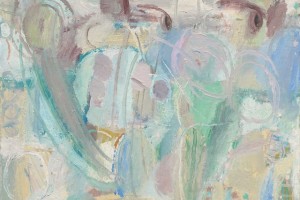
Regarding her palette, which generally uses primary colors such as red, yellow, blue, and green in their raw form, Kim Chun-mi states that it is influenced by the colors of nature. However, her colors are rather conceptual than representational. Instead of the presence of objects associated with the colors, the materiality of the colors themselves stands out more. In fact, in many cases, Kim Chun-mi's paints evoke nothing other than themselves. The red she uses appears to have no actual connection to any natural object. *Lemony Red* is painted solely in pinkish-red, bright green, and blue. There is no "lemon-colored" yellow in this painting. The color indicated by the title exists only in the viewer's mind. Absence leads to an intense presence. Due to the red that covers the entire canvas, the absent lemon color fills the hidden side of reality, much like the "lemon" in the poem by the poet Yi Sang. In Kim Chun-mi's paintings, a minimal palette, a minimal spectrum, and minimal intervention of light appear consistently, almost like a rule. The paints are thinly spread over the white canvas or simply traverse it. Most of the light is the light from the original canvas. For this reason, his paintings may appear unfinished, but conversely, it is precisely because of this that the canvas retains the purest light source—namely, the white of the canvas itself. The palette of primary colors he employs elicits maximum saturation and color combinations through this light. Even the faintest nuances of paint draw out their presence to the extreme. The most beautiful light in painting is the light emanating from the surface of the white canvas. This light sublimates the paint into immeasurable variations, following the intensity, elasticity, and rhythm of the moment the artist's body touches the canvas. The reason we are immersed in this is that these events are astonishing. This is the essence of painting. *Key in Landscape* is painted solely in yellow, blue, and red. This painting is a work that most dramatically elevates the white light of the canvas. Here, the "key" refers to "resolution" in a musical sense. A mass of red emerges in the foreground, piercing through the layers of yellow and blue air. In the upper left, the shadow of this protagonist is projected into the void. There is only the bare minimum of gesture. The reason we can gaze for hours upon the traces and debris of this clear and concise situation is that it is remarkably intertwined with the nature of our existence. A single painting is composed of hundreds of billions of events. Our gaze surveys them as a whole and stares endlessly at their details. The events revealed by the details are imprinted in every corner of the viewer's mind. And this process repeats infinitely. Kim Chun-mi's palette does not need to be complex, for her painterly structure is already premised on inexhaustible combinations. 

A painting consists of only a single frame. In the age of data media, where humanity consumes tens of millions of frames a day, the existence of 'one-frame' art is akin to a miracle. Viewers of paintings today are fundamentally different from the audiences of 50 years ago. Before approaching the work, they have already consumed countless images, information, and knowledge, becoming filled with context and meaning. Kim Chun-mi’s painting-machine changes all of this. What they discover in her work is a strange place. There is no painter, no data, no clock, and no gods. A place where there is no one and nothing, yet filled with countless clues from the world. A completely different place. An 'other world' in the truest sense reveals itself. The narrative and the flow of time within that place are generated entirely within the inner self of the person facing the painting. The painting he gazes upon is scarce, sparse, and left behind. It brings to mind Barthes’s remark about Twombly, "Non Multa Sed Multum" (not many, but many). A place where things are sparse, yet many are taking place. A place where no one is present, yet everyone is there. An empty plateau, a climax boiling up amidst the silence, a cry of unknown meaning, an exceptional moment repeating infinitely. This is where Kim Chun-mi's paintings are heading. 


Courtesy of: Rian Gallery


ⓒ 아트앤컬쳐 - 문화예술신문

댓글목록0

등록된 댓글이 없습니다.
전체 28 건

열람중김춘미 : 회화 위의 대기적 신체 (Atmospheric Body on the Painting)

Kim Chun-mi: Atmospheric Body on the Painting Yoo Jin-sang / Professor at Kaywon Art UniversityOne of the most intriguing issues raised by Kim Ch…

아트앤컬처

이민주 개인전 《空의 共鳴(The Resonance of the Void) 4》

소외의 공간에서 길어 올리는 신화의 공명 서길헌(미술비평, 조형예술학박사)화가 이민주에게 캔버스는 소외의 공간이자 끊임없이 불어나는 우주의 공간이다. 그동안 대개 피마준과 같은 붓질의 선묘로 그려진 그녀의 화면은 모든 사물이 하나의 빛으로부터 우러나오는 듯한 …

아트앤컬처

윤희경 개인전 《기억의 잔상》

생명 혹은 기억의 잔상으로부터 읽게 되는 변화의 의미에 대하여 이승훈 (미술비평) 윤희경 작가는 이번 전시에서 화면에 빛과 색이 스며드는 듯한 독특한 느낌이 담긴 여러 가지 방식의 회화 작업을 선보이게 된다. 작가는 그의 작가노트에서 “어린 시절 어머…

아트앤컬처

류광일 개인전 《알이랑: 하나님과 함께》

꿈과 행복 그리고 자유를 동반한 민들레 홀씨의 하늘 여행   신 항 섭 (미술평론가)   늦은 봄날이면 깃털처럼 가벼운 몸짓으로 천지사방 날아다니는 민들레 홀씨와 마주치게 된다. 홀씨가 자유롭게 바람에 날리는 걸 보면 덩달아 몸이 가벼워지는…

아트앤컬처

김성호, 《새벽, 빛을 품다》

글 고충환(미술평론가) 잠들지 못하고 깨어있는 새벽녘의 어스름한 여명 속에 다 쏟아놓고 싶다. 삶의 아픔, 상처, 혹은 사랑까지도···. 밝고 화사한 것보다는 어둠 속에 짙은 그리움이 느껴지는 그림, 추상적인 듯하지만 보는 이의 감성을 툭 건드리는 그림···.…

아트앤컬처

김인겸의 개인전 ≪Papier Sculpté, Sculpture Pliée / Sculpted Paper, …

전시 서문김재도 (본 전시 기획자, 홍익대학교 초빙교수) 김인겸의 개인전 ≪조각된 종이, 접힌 조각 Papier Sculpté, Sculpture Pliée/Sculpted Paper, Folded Sculpture≫은 김인겸이 1996년 퐁피두 센터의 초…

아트앤컬처

유현경: 나는 피안으로 간다

유현경: 나는 피안으로 간다강주연(Gallery JJ Director)“나는 시간을 잘 보내고 있나, 나의 깊이는 획득될 것인가 하는 고민을 한다. ··· 피안으로 가는 것이 이루지 못한 꿈이 될지 아니면 실현이 될지.” —작가노트 2025 무한한 시간 앞에…

아트앤컬처

이민주 개인전 《공의 공명3》

소외의 공간에서 길어 올리는 신화의 공명 서길헌(미술비평, 조형예술학박사)화가 이민주에게 캔버스는 소외의 공간이자 끊임없이 불어나는 우주의 공간이다. 그동안 대개 피마준과 같은 붓질의 선묘로 그려진 그녀의 화면은 모든 사물이 하나의 빛으로부터 우러나오는 듯한 …

아트앤컬처

김현실 개인전 《그대의 세계》

자연과 인간의 관계를 바라보는 관점, 그 순수성에 대해 묻다 홍경한(미술평론가) 작가 김현실의 작품들은 차분하면서도 강렬한색과 거친 선, 단순한 형태와 여타 상징적인 요소로 특징지어진다. 원시주의와 신표현주의적 여운 탓인지 원초성이 강하고, …

아트앤컬처

우지윤 개인전 《딸기의 장소》

어깨를 맞대고 바라보는 곳글 나가람이전 개인전에서 선보였던 그림들은 제 3자를 어떤 기억과 풍경으로 이끄는 듯 했다. 이번 전시에서 선 보이는 그림들은 보다 친밀하고, 사적이며 가까운 거리감으로 다가온다. 첫 인상은 이러하다: 사적이면 서 뒤로 물러나 있는, 조용하지만…

아트앤컬처

이정원 개인전 《푸른 산의 환영展》

몸으로 만나는 환영의 공간-이정원의 山中摸索

몸으로 만나는 환영의 공간-이정원의 山中摸索서길헌(미술비평, 조형예술학박사)산에서 길을 찾기는 쉬운 일이 아니다. 산에는 이미 나 있는 길 외에도 수많은 길이 잠재적으로 열려있어서 혼돈을 초래하기 때문이다. 산에 올라가서 만나는 다양한 감각을 한정된 캔버스에 옮기는 것…

아트앤컬처

김혜나, 사냥꾼이라는 이름으로

김혜나, 사냥꾼이라는 이름으로글 김솔지(더블데크웍스)물에 가라앉은 나비 날개 가루김혜나의 그림은 일렁이는 순간을 담아낸다. 그림은 두껍지 않다. 여러 층을 쌓아 올린 마티에르는 얕은 두께에도 두터운 층을 지니고 있다. 층 사이로 비치는 색상은 다채롭다. 세상이 수만 가…

아트앤컬처

이경미 ‘Last night and Neurath’s boat(지난 밤과 노이랏의 배)’ 展

복제의 복제, 의미의 이동

‘New Vertical Painting – Dürer’s apocalypse’복제의 복제, 의미의 이동김석모 (철학박사, 미술사학자)작가 이경미는 관찰한다. 대상이나 사태 혹은 현상을 관찰한다. 그리고 분석한다. 그에게 분석은 의식의 여과 과정 이다. 주관적 경험에…

아트앤컬처

영원히 끝나지 않을 이야기, 그리고 <사:람>

따뜻한 시선으로 ‘사람’에 대해 끊임없이 탐구하는 김소형

영원히 끝나지 않을 이야기, 그리고 <사:람>  이진명(미술비평ㆍ철학박사) 시인은 두 가지 종류로 나뉜다. 하나는 시를 그저 쓰기에 시인이라 불리는 사람이다. 또 하나는 시를 쓰지 않고는 도저히 이 세상을 살아갈 수가 없기에 시인으로 인정 받는 …

아트앤컬처

박현주, 윤종주, 이환권 3인전 《美妙: nuance 미묘》

미묘, 지각과 인식이 미끄러지는 틈새

미묘, 지각과 인식이 미끄러지는 틈새 황인(미술평론가)화가 박현주, 윤종주 그리고 조각가 이환권의 ‘미묘’ 삼인전이 열린다. 인간이 사물을 판단하고 느끼는 데에는 인식의 영역과 지각의 영역이 있다. 이 둘은 연결되면서도 독립적이다, 일상적인 삶에서는 …

아트앤컬처
게시판 전체검색
다크모드